The Psychology of Slot Machines | ChocoSpin
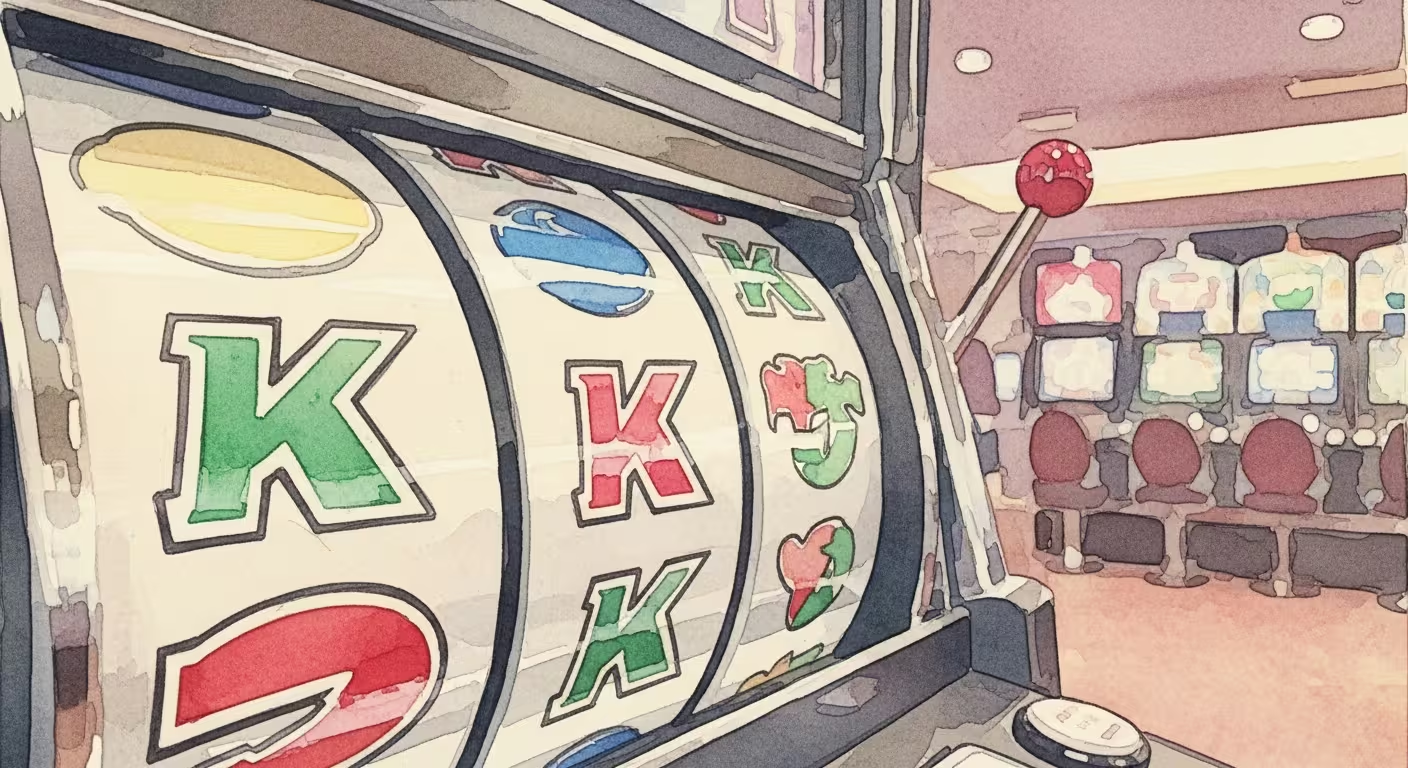
What actually happens inside a player’s mind between the moment the reels start spinning and the moment they stop? Verdict: slot machines are engineered around well-documented psychological triggers, and understanding them is the closest thing to a genuine casino strategy that a player can apply to this game type. This review breaks down the mechanics behind the pull, separates myth from mechanism, and weighs the practical upside against the risks.
None of this is about beating the house edge, which remains fixed by design. It is about recognizing the design itself, so that time spent at ChocoSpin casino or any other slots lobby is spent with clearer eyes rather than under the influence of near-miss lighting and celebratory sound cues.
Summary
| Aspect | Verdict |
|---|---|
| Educational value | Strong |
| Practical bankroll impact | Moderate |
| Entertainment framing | Solid |
| Risk of misapplication | Present |
| Overall | Recommended with caution |
Common Misconceptions
The most persistent myth is that a machine can be due for a win after a losing streak. Every spin on a certified random number generator is statistically independent of the one before it, so casino strategy built on streak-tracking has no mathematical footing.
A second misconception involves the near-miss, where two matching symbols land beside a third that just misses the payline. Behavioral research treats this as a manufactured cue that activates reward pathways almost as strongly as an actual win, even though the spin paid nothing.
Players also frequently assume that a machine’s location on the floor, or how long it has been idle, affects its payout behavior. Neither factor changes the underlying probability model, which is fixed at the software level and audited independently of foot traffic or timing.
Rating: 8/10 for how clearly the mechanics can be explained once the myths are set aside.
Strategies to Avoid
Chasing losses by increasing bet size to recover a deficit quickly is the single riskiest habit tied to slot play. It treats a game of independent outcomes as though it owes the player compensation, which it does not.
Betting systems borrowed from table games, such as doubling a wager after every loss, do not translate to slots because there is no sequence to exploit. Applying them here is a misreading of what randomness actually means in this format.
- Avoid switching machines based on a hot or cold streak.
- Avoid increasing bets to chase a prior loss.
- Avoid treating bonus rounds as a signal that more wins are imminent.
- Avoid playing past a predetermined time or loss limit.
A sounder approach is setting a fixed session budget in advance and treating any casino strategy for slots as a way to manage exposure and time, not as a method for forcing an outcome.
Verdict: Cautious — the behaviors above are common, understandable, and avoidable with a bit of preparation.
Pros and Cons
Understanding the psychology behind slot design offers real, if modest, benefits. It also carries a few limitations worth stating plainly.
- Pros: Builds awareness of manipulative design cues like near-misses and celebratory losses.
- Supports healthier bankroll habits through fixed budgets and time limits.
- Improves the ability to separate entertainment value from expectation of profit.
- Applies across most slot titles available at ChocoSpin, regardless of theme.
- Cons: Does not change the fixed house edge on any individual game.
- Requires ongoing self-discipline that some players find hard to sustain.
- Cannot predict or influence individual spin outcomes in any way.
- Benefits are behavioral, not financial, and take time to internalize.
Rating: 7/10 — the psychological framing helps more with behavior than with results, which is a fair trade for most recreational players.
Frequently Asked Questions
Does understanding slot psychology improve win rate? No. It improves decision-making and session management, but the return-to-player percentage on any machine stays constant regardless of what the player knows.
Are near-misses programmed intentionally? Many modern titles use visual designs that produce frequent near-miss patterns, a well-studied effect in gambling research, though the underlying spin result is still random.
Is there a reliable casino strategy for slots specifically? The most defensible approach is budget-based: set a loss limit, set a time limit, and treat both as non-negotiable before play begins. For further reading on account tools, players can see bonuses and related account settings.
Why do wins feel bigger than they are? Sound and light effects at small wins are calibrated to feel rewarding even when the payout is smaller than the original bet, a pattern documented across the wider slot industry, not unique to any single operator.
Verdict: Informative — the answers above cover the questions that come up most often when players start paying closer attention to how these games are built.
Taken together, the psychology behind slot machines explains a lot about why the format is so widely played, and why a modest, informed approach serves players better than any system claiming guaranteed results. Anyone spending regular time at ChocoSpin will get more consistent value by pairing that awareness with firm personal limits than by searching for patterns the machines were never built to contain.